Saturday 19 may 2012 6 19 /05 /May /2012 20:42

Jesus ressurection stone rolled away bright


1. The Dead are not praising God today.

“The dead praise not the Lord, neither any that go down into silence.” – Psalm 115:17; 6:5; 16:10; 30:9; 49:12,14-15; 89:48 Ecc 9:4-6,10


2. The Bible describes death as going to sleep.

“Consider and hear me, O Lord my God: lighten mine eyes, lest I sleep the sleep of death” – Psalm 13:3; Job 7:21; Ps90:5; Dan12:2; Jn 11:11; 1Cor11:30; 1Cor15:51; 1The5:10; Job 14:12-14


3. All humans are still sleeping in their graves today.

“Men and brethren, let me freely speak unto you of the patriarch David, that he is both dead and buried, and his sepulchre is with us unto this day.” – Acts 2:29


4. No human is in heaven except for one man, Jesus.

“And no man hath ascended up to heaven, but he that came down from heaven, even the Son of man which is in heaven.” – John 3:13; Is 38:18


5. Those dead in Christ will rise first on the last day.

“For the Lord himself shall descend from heaven with a shout, with the voice of the archangel, and with the trump of God: and the dead in Christ shall rise first.” – 1 Thessalonians 4:16; 1Cor15:51-53; Rev20:4, 6; Ez37:1-14


6. The rest of the dead will rise second.  

“And I saw the dead, small and great, stand before God; and the books were opened: and another book was opened, which is the book of life: and the dead were judged out of those things which were written in the books, according to their works.”     Revelations 20:12; Matt10:15; 12:41-42; 13:47-50; 16:27; Jn5:28-29


 Church of God (7th Day) – Salem Conference

http://www.churchofgod-7thday.org/

Pour nous contacter en français

edd7jour@gmail.com

By Sabbath Keeper
Enter comment - View the 0 comments
Saturday 19 may 2012 6 19 /05 /May /2012 20:39

BibleStudy


1. Christ has redeemed us from the curse of the law found in the Book of the Law of Moses.

“Christ hath redeemed us from the curse of the law, being made a curse for us … That the blessing of Abraham might come on the Gentiles through Jesus Christ; that we might receive the promise of the Spirit through faith.” – Galatians 3:13-14


2. Believing in Christ makes everyone right with God. We are saved by grace, not by works.

“For by grace are ye saved through faith; and that not of yourselves: it is the gift of God: Not of works, lest any man should boast. For we are his workmanship, created in Christ Jesus unto good works, which God hath before ordained that we should walk in them.” – Ephesians 2:8-10; Romans 3:24


3. Jesus gives believers peace that the world can never offer.

“Peace I leave with you, my peace I give unto you: not as the world giveth, give I unto you. Let not your heart be troubled, neither let it be afraid.” – John 14:27


4. Jesus understands our weaknesses. Jesus is our High Priest who mediates on our behalf to God.

“For we have not an high priest which cannot be touched with the feeling of our infirmities; but was in all points tempted like as we are, yet without sin.” – Hebrews 4:15


5. Jesus is the New Adam sent to restore the spirit of God in us through faith. Jesus has allowed us to act on the potential for good that God has placed in everyone by His power and grace.

“And so it is written, The first man Adam was made a living soul; the last Adam was made a quickening spirit. Howbeit that was not first which is spiritual, but that which is natural; and afterward that which is spiritual. The first man is of the earth, earthy; the second man is the Lord from heaven. As is the earthy, such are they also that are earthy: and as is the heavenly, such are they also that are heavenly. And as we have borne the image of the earthy, we shall also bear the image of the heavenly.” – 1 Corinthians 15:45-49; 2Cor 12:9


Church of God (7th Day) – Salem Conference

http://www.churchofgod-7thday.org/

Pour nous contacter en français

edd7jour@gmail.com

By Sabbath Keeper - Posted in: Études de la Bible/ Bible Studies - Community: Jesus Christ
Enter comment - View the 0 comments
Saturday 19 may 2012 6 19 /05 /May /2012 20:37

Shabbat Shalom


1. The Seventh Day Sabbath is the 4th commandment.

“Remember the sabbath day, to keep it holy. Six days shalt thou labour, and do all thy work: But the seventh day is the sabbath of the Lord thy God: in it thou shalt not do any work, thou, nor thy son, nor thy daughter, thy manservant, nor thy maidservant, nor thy cattle, nor thy stranger that is within thy gates.” – Exodus 20: 8-10


2. God blessed and sanctified the Seventh Day.

“And God blessed the seventh day, and sanctified it: because that in it he had rested from all his work which God created and made.” – Genesis 2:3


3. Jesus says the Sabbath is a gift from God.

“And he said unto them, The sabbath was made for man, and not man for the sabbath.” – Mark 2:27

4. The Sabbath is for everyone!

“every one that keepeth the sabbath from polluting it, and taketh hold of my covenant; Even them will I bring to my holy mountain, and make them joyful in my house of prayer … for mine house shall be called an house of prayer for all people.” – Isaiah 56:6-7


5. The 7th Day Sabbath is still for Christians today.

“There remaineth therefore a rest to the people of God. For he that is entered into his rest, he also hath ceased from his own works, as God did from his. Let us labour therefore to enter into that rest, lest any man fall after the same example of unbelief.” – Hebrews 4:9-11


Church of God (7th Day) – Salem Conference

http://www.churchofgod-7thday.org/

Pour nous contacter en français

edd7jour@gmail.com

By Sabbath Keeper - Posted in: Sabbath/ Sabbat - Community: Jesus Christ
Enter comment - View the 0 comments
Saturday 19 may 2012 6 19 /05 /May /2012 20:32

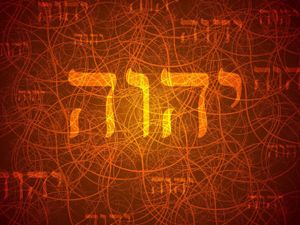
Hebrew Yahveh


1. The Bible says that God cannot be tempted.

“Let no man say when he is tempted, I am tempted of God: for God cannot be tempted with evil, neither tempteth he any man.” – James 1:13

What happened to Jesus in Matthew 4:1?

“Then was Jesus led up of the Spirit into the wilderness to be tempted of the devil.” – Matthew 4:1


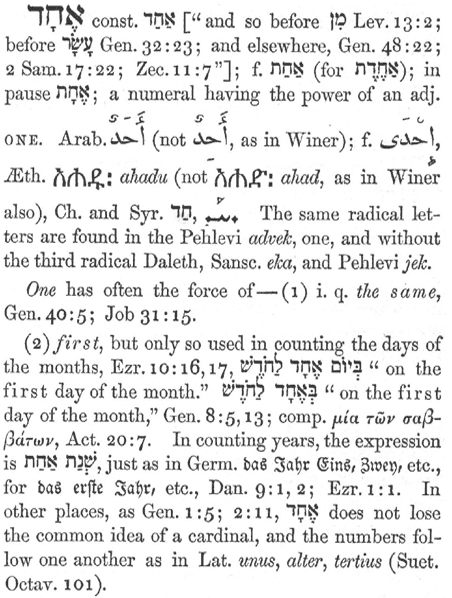
2. The True God is One God.

“Hear, O Israel; The Lord [Jehovah] our God is one Lord [Jehovah]” – Mark 12:29 – the words of Jesus.


3. The One True God sent Jesus the Messiah.

“And this is life eternal, that they might know thee the only true God, and Jesus Christ, whom thou hast sent.” – John 17:3


4. Jesus prays to his God the Father.

“And Jesus lifted up his eyes, and said, Father, I thank thee that thou hast heard me.” – John 11:41


5. Only God the Father is omniscient.

“But of that day and hour knoweth no man, no, not the angels of heaven, but my Father only.” – Matthew 24:36


Church of God (7th Day) – Salem Conference

http://www.churchofgod-7thday.org/

Pour nous contacter en français

edd7jour@gmail.com

By Sabbath Keeper - Posted in: Trinité ?/Trinity ? - Community: Jesus Christ
Enter comment - View the 0 comments
Saturday 12 may 2012 6 12 /05 /May /2012 22:55

img 3681 small


Unless otherwise noted, all scripture quotations are from the King James Version.


This tract has been prepared to expressly discuss the seven festivals that the LORD added to the already existing 7th Day Sabbath (Genesis 2:1-3; Exodus 16:23). Also ask for our tract “The LORD's Sanctified Day”. To see about The Passover (Exodus 12:6), see our tract, “The Passover and The Lord's Supper.”


These seven feasts were added because of Israel's transgressions (see Galatians 3:19). Remember, while Moses was receiving the tables of stone, containing only the Ten Commandments that came from God, the people were sinning (Exodus 32:7). The tables of stone were “written with the finger of God” (also see Deuteronomy 9:9-10). The sacrificial, ceremonial or Mosaic laws were written by Moses in a book (Deuteronomy 31:24).


It is important to understand that these feast days are a “road map” to Jesus for Israel. The people who accept Jesus Christ as their Lord and Savior and soon coming King do not need to keep these days. We are not “spiritual Jews”. We are not blinded. But, those who were blinded needed to do the “whole law” (Galatians 5:1-3).


In Numbers, chapters 13 and 14, Israel does not believe God (see Numbers 14:11). Israel did not hear Moses and the prophets (Luke 16:31), and they did not believe Jesus (John 8:45-46). Read Matthew 21:33-46. Israel has become blind and deaf, not to the ways of God but, to His Son (Acts 28:23, 31). Read also Acts 25-27, and John 5:37-40. Jesus has used and will use these days to reveal Himself to them.


THE FEASTS OF ISRAEL


The feasts of Israel are a very intriguing subject. Like all subjects of the Bible, they must be studied to understand why they existed in the first place. Some of the questions that are asked today are: “Haven't they always existed? Shouldn't we be keeping them now? Aren't they only for Israel? Since God is finished with Israel, shouldn't God's people keep them today?” We could go on and on about the comments and questions, but that gives you, the reader, an idea of what a Bible student faces today. Always remember, God's truth is very simple. Man has complicated it. In fact, the truth is so simple that many reject it (Proverbs 1:1-4). It is the purpose of this tract to enlighten, inform and instruct the reader as to the who, what, when, where, how and why regarding these feast days. When God created man, we have to believe that He instructed them, Adam and Eve, about His commandments; otherwise they could not have sinned. He taught them, they disobeyed and therefore, were cast out of the garden. We know that Adam sinned, because we are told in Romans 5:12, “Wherefore, as by one man sin entered into the world, and death by sin; and so death passed upon all men, for that all have sinned.” In addition, the word sin is used eight times (Strong’s Concordance) before Exodus 20. What is Sin? I John 3:4 tells us, “Whosoever committeth sin transgresseth also the law: FOR SIN IS THE TRANSGRESSION OF THE LAW.” The law of God that was in effect was the Ten Commandment Law. We also learn that Abraham, the father of the faithful is commended for his character, in Genesis 18:19, “For I know him, that he will command his children and his household after him, and they shall keep the way of the Lord, to do justice and judgment; that the Lord may bring upon Abraham that which he hath spoken of him.” If the Ten Commandments were not in effect, Cain could not have sinned (Genesis 4:7). The men of Sodom would not have been wicked and sinners (Genesis 13:13), and King Abimelech would not have been so troubled by the possibility of committing sin (Genesis 20:9). When God brought forth the nation of Israel, He reintroduced the people to the Ten Commandments, because, after all, they had been reduced to slaves, the “flesh pots of Egypt” and had lived this way for over 400 years. In Exodus 20:1-20, God wrote the Ten Commandments with His finger (etched in stone) and Moses states in verse 20, “Fear not: for God is come to prove you, and that his fear may be before your faces, that ye sin not.” Now, this is a very critical time because it was God's intention to give the Ten Commandments and nothing else. This He did for we are told in Deuteronomy 5:22, “These words [verses 6 to 21] the Lordspake unto all your assembly in the mount out of the midst of the fire, of the cloud, and of the thick darkness, with a great voice: AND HE ADDED NO MORE. And he wrote them in two tables of stone, and delivered them unto me.” You see, God only gave the Ten Commandments to Moses at this time. But, what happened? While Moses was receiving the tablets from God, the Israelites were complaining to Aaron that they did not know what happened to Moses, and they told Aaron, “Up, make us gods, which shall go before us” (Exodus 32:1). They said to Moses they would hear in Exodus 20:19-20, “Speak thou with us, and we will hear: but let not God speak with us, lest we die. And Moses said unto the people, Fear not: for God is come to prove you, and that his fear may be before your faces, that ye sin not”. Before Moses had returned from sojourning with God, they wanted to have “others gods before them” in direct violation of the first commandment which they agreed to “hear”. We find that the LORD spoke to Moses in Exodus 32:7-10 and wanted to destroy Israel, “And the Lordsaid unto Moses, Go, get thee down; for thy people, which thou broughtest out of the land of Egypt, have corrupted themselves: They have turned aside quickly out of the way which I COMMANDED THEM: they have made them a molten calf, and have worshipped it, and have sacrificed thereunto, and said, These be thy gods, O Israel, which have brought thee up out of the land of Egypt. And the Lord said unto Moses, I have seen this people, and, behold, it is a stiffnecked people: Now therefore let me alone, that my wrath may wax hot against them, and that I may consume them: and I will make of thee a great nation.” We know that Moses intervened on behalf of the people, and God changes His mind (Exodus 34:14). Because of these transgressions, He added the seven feast days (Galatians 3:19-24). We see in verse 24, “…the law was our schoolmaster to bring us unto Christ …”


God knew that they were going to have difficulty accepting Jesus as the Messiah, so He planned a way to point out His Son. The laws had become so important, that they missed Him. Jesus spoke very plainly to them in John 5:39-40, and except for the disciples, most of the Pharisees and Sadducees rejected Him.


The feast days were an important part of their lives, so it makes sense that Jesus would do things in accordance with these practices.


Remember, we do not know too much of Jesus' early life and He indicates on at least two occasions that His time or hour had not yet come. John 2:4 and 7:6. It is interesting to note that here in John 7 we start to read of the transition or transformation. John 7:2-10 tells us, “Now the Jew's feast of tabernacles was at hand. His brethren therefore said unto him, Depart hence, and go into Judaea, that thy disciples also may see the works that thou doest. For there is no man that doeth any thing in secret, and he himself seeketh to be known openly. If thou do these things, shew thyself to the world. For neither did his brethren believe in him. Then Jesus said unto them, My time is not yet come: but your time is always ready. The world cannot hate you; but me it hateth, because I testify of it, that the works thereof are evil. Go ye up unto this feast: I go not up yet unto this feast: for my time is not yet full come. When he had said these words unto them, he abode still in Galilee. But when his brethren were gone up, then went he also up unto the feast, not openly, but as it were in secret.”  In verses 14 to 18, we read, “Now about the midst of the feast Jesus went up into the temple, and taught. And the Jews marvelled, saying, How knoweth this man letters, having never learned? Jesus answered them, and said, My doctrine is not mine, but his that sent me. If any man will do his will, he shall know of the doctrine, whether it be of God, or whether I speak of myself. He that speaketh of himself seeketh his own glory: but he that seeketh his glory that sent him, the same is true, and no unrighteousness is in him.” Even after this, they sought to kill him. Verse 19 states, “Did not Moses give you the law, and yet none of you keepeth the law? Why go ye about to kill me?” Late in verse 28 He tried to tell them plainly who He was and where He came from. Finally in verses 37 and 38, Jesus revealed Himself. “In the last day, that great day of the feast (ref. Leviticus 23:36), Jesus stood and cried, saying, If any man thirst, let him come unto me, and drink. He that believeth on me, as the scripture hath said, out of his belly shall flow rivers of living water.” Some people realized who He was, and some did not. “Many of the people therefore, when they heard this saying, said, Of a truth this is the Prophet. Others said, This is the Christ. But some said, Shall Christ come out of Galilee? Hath not the scripture said, That Christ cometh of the seed of David, and out of the town of Bethlehem, where David was?” So Jesus used one of the feast days to try to show the people of Israel that He was the one that they awaited for - the Messiah. In the gospel of John chapter 12:12-15, Jesus fulfills Zechariah 9:9, “Rejoice greatly, O daughter of Zion; shout, O daughter of Jerusalem: behold, thy King cometh unto thee: he is just, and having salvation; lowly, and riding upon an ass, and upon a colt the foal of an ass.” Remember, John the Baptist had already identified Jesus as the Lamb of God. SeeJohn 1:29 and 1:36. Now, the people were selecting God's Lamb as their King. In Exodus 12:3, we read, “Speak ye unto all the congregation of Israel, saying, In the tenth day of this month they shall take to them every man a lamb, according to the house of their fathers, a lamb for an house” While the people were selecting their lamb for the annual Passover, Jesus was presenting Himself as the ultimate Passover Lamb. The Apostle Paul clearly states in I Corinthians 5:7, “Purge out therefore the old leaven, that ye may be a new lump, as ye are unleavened. For even Christ our PASSOVER is sacrificed for us.” This is not coincidence, this is completing a plan. At approximately the same time Israel prepared its household lamb for the yearly feast, Jesus shed His blood on the stake. See John 18:28. The men who brought Jesus to Pilate had not eaten the Passover yet - Jesus had already instituted the emblems on the evening before, the start of the 14th day of the first month. Jesus fulfilled the feast of the Passover at His death.


In Leviticus 23:6 and 23:8 we learn of the first and last day of unleavened bread. The purpose of these days were to mark the beginning and end of the spring festival but, more importantly to identify the weekly Sabbath after which the wave sheaf was to be offered. In Leviticus 23:9-11, we read, “And the Lord spake unto Moses, saying, Speak unto the children of Israel, and say unto them, When ye be come into the land which I give unto you, and shall reap the harvest thereof, then ye shall bring a sheaf of the firstfruits of your harvest unto the priest. And he shall wave the sheaf before the Lord, TO BE ACCEPTED FOR YOU: on the morrow after the [weekly] sabbath the priest shall wave it.”  


In I Corinthians 15:23 (first part), we read, “But every man in his own order: Christ the firstfruits …


We teach and scripture supports a Wednesday crucifixion and Saturday resurrection. In keeping with this, John's Gospel tells us in chapter 20:1 that Mary Magdalene arrived at the sepulchre on the first day of the week, Sunday, the morrow after the weekly Sabbath. Jesus had already risen from the dead. And she found the tomb empty. Her arrival does not indicate when the resurrection happened. It just confirms that it did happen. In verse 16 “Jesus [whom she did not recognize] saith unto her, Mary. She turned herself, and saith unto him, Rabboni; which is to say, Master.” Now Jesus tells us as well as Mary something significant. Jesus said unto her, “Touch me not; for I am not yet ascended to my Father: but go to my brethren, and say unto them, I ascend unto my Father, and your Father; and to my God, and your God.” Do you see the parallel? Jesus, the firstfruits, presented Himself to the Father on the same day the Priest was waving the sheaf of firstfruits before the LORD. Later on in Luke 24:36-39, we read about Jesus who appeared in a different form. “And as they thus spake, Jesus himself stood in the midst of them, and saith unto them, Peace be unto you. But they were terrified and affrighted, and supposed that they had seen a spirit. And he said unto them, Why are ye troubled? and why do thoughts arise in your hearts? Behold my hands and my feet, that it is I myself: handle me, and see; for a spirit hath not flesh and bones, as ye see me have.”


Sequence:

1. Jesus is resurrected.

2. He tells Mary not to touch Him.

3. He presents Himself as the firstfruits. Similarly the firstfruits are being presented by the priest.

4. Later, it is alright for the disciples to touch Him.


Once the spring festival is under way, the weekly Sabbath that was used to precede the wave sheaf offering is the same Sabbath that is used to start counting for the summer festival, Pentecost. We read in Leviticus 23:15, “And ye shall count unto you from the morrow after the sabbath, from the day that ye brought the sheaf of the wave offering; seven sabbaths shall be complete: [49 days] Even unto the morrow after the seventh sabbath [1 day] shall ye number fifty days.”  Pentecost means fifty. On this day, the Holy Spirit was poured out upon the Church as a fulfillment of the feast of Pentecost. This was foretold in John 14:16-18; 15:26-27; 16:7-11, 12-15.


It was promised in Acts 1:1-5 and was fulfilled in Acts 2:1-4. Jesus has now done something of great significance on these days. There is now a change because Israel did not accept Jesus. Paul indicates in I Corinthians 1:23, “But we preach Christ crucified, unto the Jews a stumblingblock, and unto the Greeks foolishness.” Read also Matthew 21:42-43. Because they rejected him, they became blind and their hearing dull (Acts 28:25-28). Israel remains in this condition until the return of the Lord. Paul referred to himself as being “born out of due time” (I Corinthians 15:8). Jesus returned to His Father “to prepare a place for us.” He will return for the saints, “But of that day and hour knoweth no man, no, not the angels of heaven, but my Father only” (Matthew 24:36). In this return, He first returns for the Saints (I Corinthians 15:23, last part). “afterward they that are Christ's at his coming.” See alsoRevelation 14:14, 15:1-3. After He reaps the saints, the seven last plagues will be poured out on the wicked (Psalm 91:8). After this, the saints return with Jesus to set up His everlasting kingdom. Now He returns as King of Kings. See Revelation 11:15, 19:11-16, 17:14. This phase, the second part of His coming, will usher in His kingdom here on the earth. The second phase of His coming will be heralded with trumpets, thus fulfilling the feast of Trumpets. See Numbers10 and the uses of the trumpets. Pay particular attention to verses 7 and 9. Jesus will not only return to set up the kingdom but also to reestablish His relationships with Israel. In Zechariah 12:10, we learn that Israel will atone for its rejection of Jesus. “And I will pour upon the house of David, and upon the inhabitants of Jerusalem, the spirit of grace and of supplications: and they shall look upon me whom they have pierced, and they shall mourn [blindness removed] for him, as one mourneth for his only son, and shall be in bitterness for him, as one that is in bitterness for his firstborn.” In that day, there shall be great mourning in Jerusalem (SeeZechariah 13:1, 2, 6.).


Later on in Zechariah 14:16, we learn that the feast of tabernacles will be kept. Remember, these days were added for Israel, and during the millennium the people (except for the saints) will still be physical, and they will be celebrating their temporary existence, temporary dwelling looking forward to the permanent and spiritual life.


Jesus used these feast days as a road map to find Him. The directions remain the same. It is necessary to pay attention to these feasts, and understand their fulfillment.


The Church of God - Publishing House- PO Box 328; Salem, West Virginia 26426-0328 - Phone: 304-782-1411; Fax: 304-782-2248; E-mail: cogsevday@aol.com

By Sabbath Keeper - Posted in: Sabbath/ Sabbat - Community: Jesus Christ
Enter comment - View the 0 comments

Bible

Divine-Name-King-James-Bible.jpg


Ostervald en ligne


Create your blog for free on over-blog.com - Contact - Terms of Service - Earn Royalties - Report abuse - Most commented articles